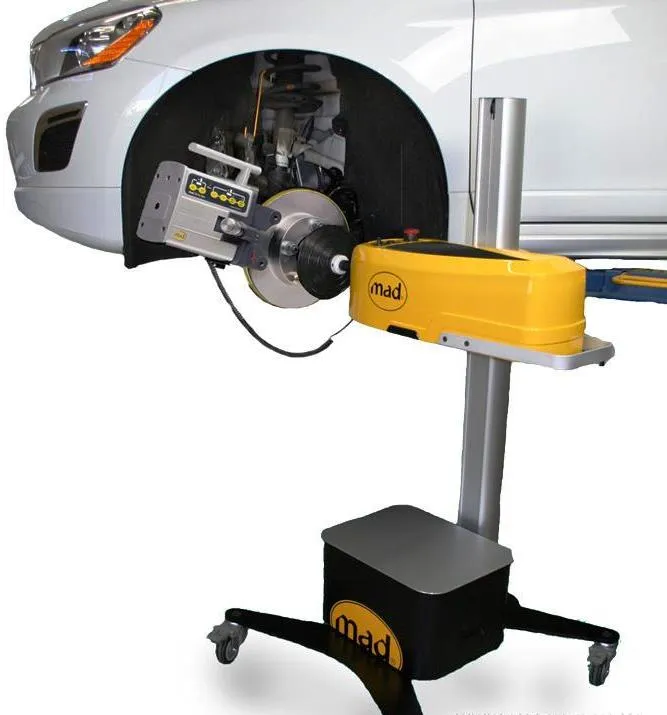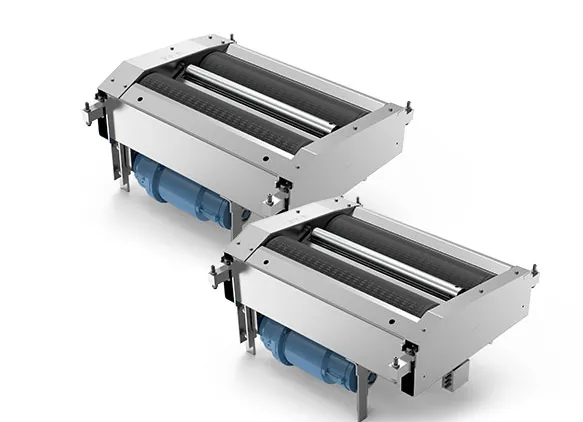
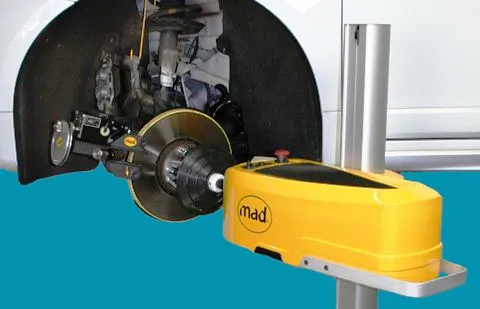
Brake disc lathe DA 8700
Price on request
Brake disc resurfacing machine DA 8700 / Power 0.37kW
Rotation speed 100 rpm
Automatic feed speed 8.5 mm/min
Machining result: runout under 20µmRA, disc thickness variation under 20µmRA,
Max disc diameter 39mm
Max machining depth 0.8mm
Working height 102-120 adjustable
Equipment includes:
Disc rotation motor with control and drive
Disc machining head with electric drive
Disc machining adapter M7
36V spiral cable
Cooling oil
Standard noise-reducing belt
Tool box
Manufacturer MAD (Netherlands)
Some info about brake disc servicing
Why brake discs need resurfacing
Problems...
Independent studies show about 80% of currently operating cars have braking problems – steering wheel, brake pedal, body vibration, braking force fluctuation during braking. All these problems can be solved permanently by resurfacing (machining) brake discs.
Brake system servicing
Friction between brake pads and discs causes wear and aging of both components. Optimal braking deceleration is achieved only when both components (discs and pads) are perfectly flat and parallel. When one component is replaced due to wear, the other must be ready to work with its new "partner".
Brake problems
Metal machining completion, assembly tolerances and quality execution, as well as minor brake disc defects are noticeable to the driver. Steering wheel, brake pedal vibration, braking noise during braking. There are three direct causes:
Disc deformation (RUN-OUT) is disc working surface runout relative to its rotation axis. This can be caused by hub and disc tolerances or deformation from sudden loads. This runout can be felt through the steering wheel. Brake disc and pads are not flat.
Disc thickness variation is varying disc thickness measured at different radial flatness points. This is a logical result of metal structure differences caused by disc deformation and ongoing changes such as ambient temperature, humidity, load.
Disc thickness variation can be clearly felt through the brake pedal. Brake disc and pads are not flat.
Disc unevenness is brake disc working surface unevenness causing vibration of high or low frequency brake components, and also excessive noise during braking.
THE RIGHT WAY TO SOLVE PROBLEMS
Most car manufacturers agree that the only method to eliminate brake problems is brake disc resurfacing (straightening) on the car. However, it is very important that resurfacing is done according to pad mounting flatness. Based on this, DL8700, MAD DA2002 are manufactured consulting with world-leading car manufacturers such as Mercedes-Benz, Toyota, Honda, Volvo, Alfa Romeo, Daewoo, Subaru, Rover, Lexus, Peugeot, Seat, Proton, Fiat, Isuzu, Kia, Lancia, Mazda, Nissan, Citroen, Hyundai, Mitsubishi, Daihatsu.
Related products